
Introduction
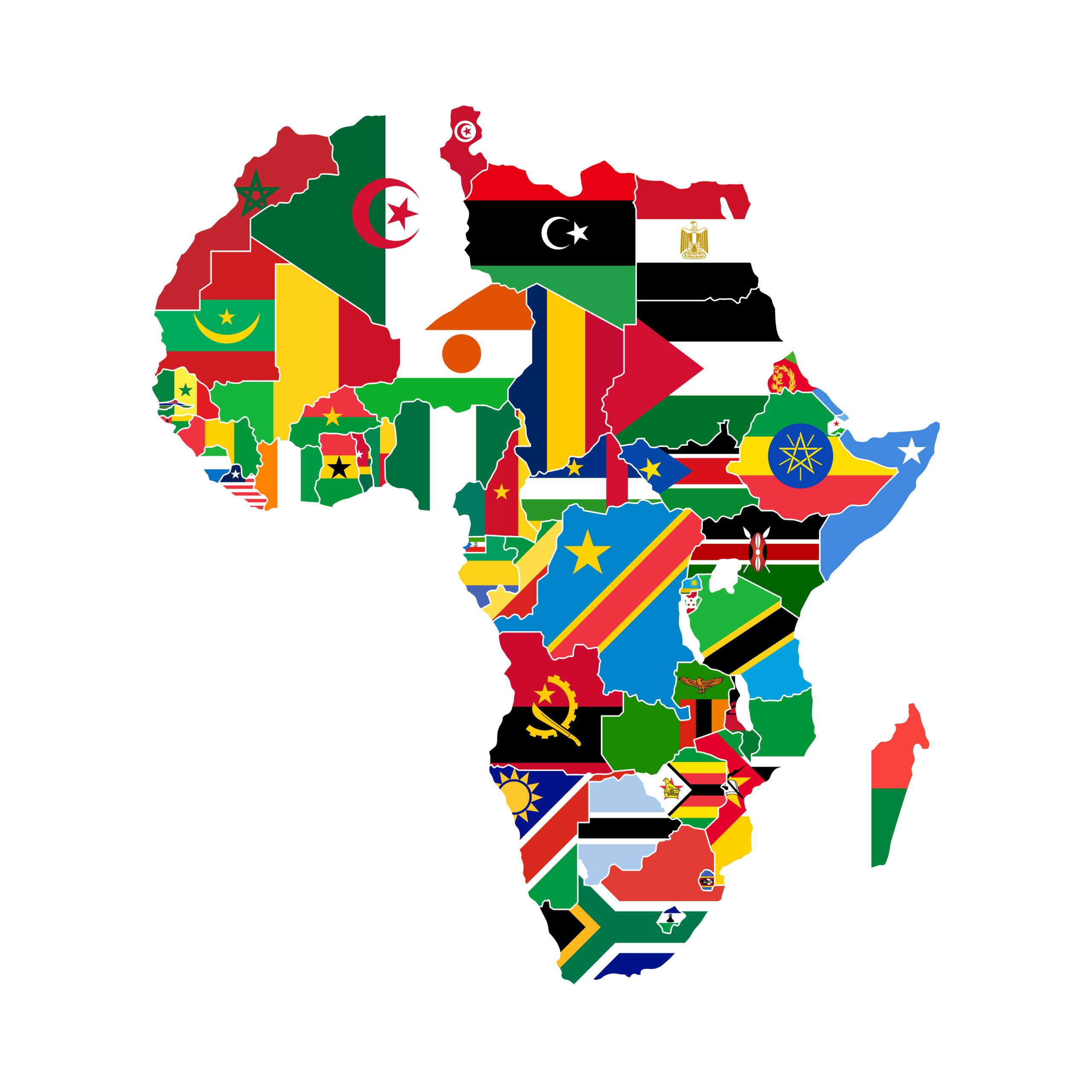
Today, 25 May 2026, the African continent marks the sixty-third anniversary of the founding of the Organisation of African Unity in Addis Ababa in 1963. The institution that has since matured into the African Union. The African Union has commemorated the occasion under the theme “Sixty-three (63) Years of Unity, Integration and Development, let’s celebrate together”, while its over-arching theme for the year 2026 is “Assuring Sustainable Water Availability and Safe Sanitation Systems to Achieve the Goals of Agenda 2063”.
For the Kingdom of Lesotho, Africa Day is more than a continental observance. It is an occasion to reflect on the country’s distinct constitutional, geographic, and economic position within the African family. A position that intersects, in unusually direct ways, with the continental agenda for 2026 and with the long-term aspirations of Agenda 2063.
At Mayet & Associates, our practice sits at the meeting point of these conversations. As legal advisors in a small, landlocked, and strategically positioned jurisdiction, we are reminded daily that questions of trade, water, investment, governance, and the rule of law cannot be understood in purely domestic terms. They are continental questions, and Lesotho’s answers to them matter both at home and abroad.
This commentary offers a brief Africa Day reflection on three themes: water as a continental and constitutional concern; the African Continental Free Trade Area and what it means for Lesotho’s commercial future; and the rule of law as the indispensable foundation for the Africa that Agenda 2063 envisages.
I. Water: Lesotho’s Continental Calling
The African Union’s choice of water and sanitation as its theme for 2026 is timely and overdue. Across the continent, hundreds of millions of people remain without reliable access to safe water or adequate sanitation. Climate change, urbanisation, and growing demand have intensified pressures on freshwater resources, while the burdens of water scarcity fall disproportionately on women, girls, and rural communities.
Lesotho occupies a singular place in this continental conversation. Often described as the “Water Tower of Southern Africa,” the Kingdom is the source of the Senqu (Orange) River system and the home of the Lesotho Highlands Water Project, one of the largest cross-border water infrastructure schemes on the continent. The Project, governed by the 1986 Treaty between the Government of the Kingdom of Lesotho and the Government of the Republic of South Africa, transfers water from the Lesotho highlands to the industrial heartland of South Africa in exchange for royalties paid to the Kingdom.
The Project illustrates several truths that resonate beyond Lesotho’s borders. It demonstrates that water is, for African states, simultaneously an ecological resource, a developmental asset, and a sovereign right requiring careful legal stewardship. It shows that bilateral and multilateral water arrangements can be vehicles for African economic integration, but only where they are anchored in clear treaty obligations, transparent governance, and effective dispute-resolution mechanisms. And it underscores that the legal architecture surrounding shared water resources, from royalty arrangements to environmental obligations and benefit-sharing, requires sustained legal attention if the resource is to serve both present and future generations.
The 2026 AU theme invites African states to think structurally about water. For Lesotho, that invitation is also an opportunity: to consolidate domestic water law, to strengthen the institutional framework governing trans-boundary watercourses, and to position the Kingdom as a leading voice in the continental conversation about water security under Agenda 2063.
II. The AfCFTA and Lesotho’s Place in the African Market
Africa Day 2026 also falls at a pivotal moment in the implementation of the African Continental Free Trade Area (“AfCFTA”). The AfCFTA, a flagship project of Agenda 2063, seeks to bring the fifty-five member states of the African Union into a single integrated market of approximately 1.4 billion people with a combined gross domestic product in the region of US$3.4 trillion.
Lesotho deposited its instrument of ratification of the AfCFTA Agreement in November 2020 and participates in the framework as part of the Southern African Customs Union (“SACU”). Lesotho’s provisional schedule of tariff concessions has been submitted, and the country features among the African states whose offers have been transmitted to the AfCFTA Secretariat for verification.
The implications for Lesotho-based enterprise are substantial. A small economy with a population of approximately two million, surrounded entirely by South Africa, Lesotho has long depended on a narrow band of trading partners and a limited range of export industries, chiefly textiles, water, and diamonds. The AfCFTA, properly leveraged, offers Lesotho producers, from agro-processors and small-scale farmers to manufacturers and service providers, preferential access to a continental market that is many orders of magnitude larger than any to which they have previously had structured access.
That promise, however, will not realise itself. It will require:
- Regulatory readiness, so that Lesotho enterprises understand and can comply with the AfCFTA’s rules of origin, customs procedures, and standards regimes;
- Contractual sophistication, so that cross-border supply, distribution, agency, and joint-venture arrangements are properly structured to allocate risk and to take advantage of preferential treatment;
- Investment protection, so that Lesotho enterprises trading or investing abroad and foreign enterprises investing into Lesotho, have access to predictable and enforceable frameworks under the AfCFTA Protocol on Investment and applicable bilateral instruments; and
- Dispute-resolution literacy, so that commercial parties operating in this newly integrated market have access to credible mechanisms for the resolution of disputes, including arbitration and mediation conducted to international standards.
These are precisely the areas in which African legal practitioners and the firms that advise Lesotho-based businesses, will play a defining role over the coming decade. Africa Day is a useful moment to recommit to that work.
III. The Rule of Law: The Foundation of Agenda 2063
If water is the resource and trade is the engine, then the rule of law is the foundation upon which Agenda 2063 must be built. The African Union’s own Aspirations, including aspirations of “good governance, democracy, respect for human rights, justice and the rule of law” and “an Africa whose development is people-driven,” depend on the continent’s ability to ensure that public power is exercised lawfully, that contracts are honoured, that disputes are resolved fairly, and that those who govern remain accountable to those they govern.
Recent events in our own region underscore both the fragility and the resilience of those commitments. The legal architecture of African states is being tested in real time, by complex cross-border commercial disputes, by the recognition and enforcement of foreign judgments and arbitral awards, by allegations of corruption and procurement irregularity, and by the difficult work of ensuring that public contracts comply with constitutional and statutory requirements.
For Lesotho, the past several years have produced jurisprudence that speaks directly to these themes. Decisions of the Lesotho courts, and of regional and foreign courts considering Lesotho matters, have reaffirmed core principles: that public officials cannot bind the State outside the bounds of the Constitution and the Public Financial Management and Accountability Act, 2011; that mandatory procurement processes under the Public Procurement Regulations, 2007 are not optional formalities but binding statutory obligations; that arbitral awards, however formally regular, will not be enforced where the underlying agreement offends public policy; and that the courts retain a supervisory role over the conduct of arbitral proceedings affecting the State.
These principles are not unique to Lesotho. They are common to constitutional democracies across the continent, and they form part of the legal infrastructure on which African integration ultimately rests. Investors and trading partners need to know that the rules will be enforced. African citizens need to know that public resources will be lawfully deployed. And the institutions of the African Union need to know that member states are committed to the values inscribed in the Constitutive Act and in Agenda 2063.
IV. The Lesotho Perspective: Small State, Continental Stake
Lesotho is a small state in population and in geography. But its stake in the success of the African project is no smaller than any other member state’s, and in some respects it is larger. Landlocked and economically integrated with the wider Southern African region, Lesotho’s prosperity depends on the prosperity of its neighbours, on the credibility of regional institutions such as SACU and SADC, and on the broader continental framework provided by the African Union and the AfCFTA.
The legal profession in Lesotho has, in our view, a particular responsibility on Africa Day. We are the practitioners who advise government on the treaties it ratifies and the contracts it concludes. We are the counsel who structure cross-border commercial transactions and who litigate them when they fail. We are the advisors who help Basotho enterprises navigate continental markets and who help foreign investors understand the constitutional and statutory framework within which they must operate. We are, in short, part of the connective tissue between Lesotho and the continent.
That responsibility is not ceremonial. It is daily, technical, and demanding. And it is precisely the kind of work that gives Agenda 2063 its substance.
Conclusion
Africa Day is, by tradition, an occasion of celebration and rightly so. Sixty-three years on from the founding of the OAU, the continent has institutions, frameworks, and aspirations that the generation of 1963 could only imagine. The challenges remain formidable: water and sanitation, infrastructure, governance, security, climate, and the long work of economic integration. But the architecture for addressing them is, for the first time in living memory, properly continental in scope.
From Maseru, on this Africa Day, Mayet & Associates joins in that celebration. We do so conscious that the legal profession has practical work to do, in water law and trans-boundary resources, in trade and investment under the AfCFTA, in commercial dispute resolution, and in the unglamorous but indispensable task of upholding the rule of law. We do so committed to the proposition that a prosperous, integrated, and peaceful Africa is not a slogan but a project, one that lawyers, alongside policymakers, business leaders, and citizens, are called to build.
Khotso. Pula. Nala.
Mayet & Associates is a Maseru-based law firm advising clients on commercial law, cross-border transactions, public procurement, arbitration, constitutional litigation, and regulatory matters in the Kingdom of Lesotho and the wider Southern African region. For further information, contact our offices in Maseru or visit www.zmayetlaw.co.ls.
This commentary is provided for general information purposes only and does not constitute legal advice. Readers should seek specific legal advice on the application of any of the matters discussed to their particular circumstances.