
Commercial, Banking & Finance and Cross-Border Advisory
by Zurayda Mayet
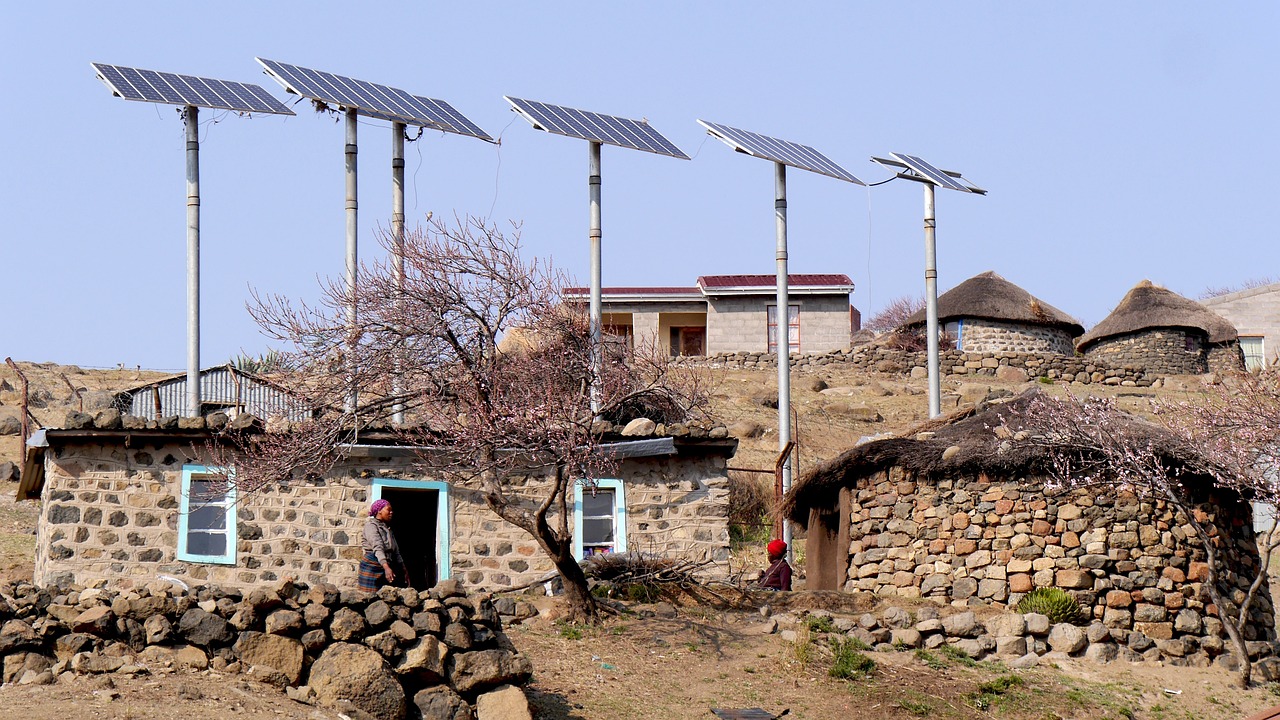
The World Bank Group’s approval of a US$50-million (approximately M900-million) concessional credit to expand electricity access in Lesotho has rightly been welcomed as a development milestone. Channelled through the International Development Association and anchored in the country’s National Energy Compact under the joint World Bank African Development Bank Mission 300 initiative, the Accelerating Sustainable and Clean Energy Access Transformation (ASCENT–Lesotho) programme aims to reach close to 147,000 people and businesses through a combination of grid expansion and off-grid solar.
For Basotho households still relying on candles, kerosene and biomass, particularly in the highlands, where barely four in ten homes are connected, the human significance of that figure is clear. But behind the development headline sits a dense legal and commercial architecture. Concessional credit does not build substations or distribute solar home systems on its own. It must be on lent, procured, contracted, licensed, secured and, inevitably, disputed. Each of those steps is a legal event, and each carries risk for the parties involved, government, the utility, independent power producers, off-grid operators, financiers and the communities being connected.
This article sets out the questions we believe developers, investors and institutional clients should be asking as the programme moves from announcement to implementation.
The licensing gateway: who may lawfully supply power?
Any party intending to participate in Lesotho’s electricity supply industry begins from the same starting point. Under the Lesotho Electricity Authority Act No. 12 of 2002 (as amended), the generation, transmission, distribution and supply of electricity are regulated activities that may only be undertaken under a licence granted by the Lesotho Electricity and Water Authority (LEWA). Conducting a regulated activity without the requisite licence, or outside the conditions attached to it, is an offence, not merely a commercial irregularity.
The framework is more textured than a single licensing requirement suggests. The Lesotho Electricity Company operates under a composite licence within a defined service territory; outside that territory, electrification is driven by the Rural Electrification Unit of the Department of Energy and by independent power producers. Statutory exemptions exist for certain small-scale generation. LEWA’s recently strengthened mini-grid regulatory framework and its distributed generation and net-billing rules add further layers that any rural or off-grid project must navigate from the outset.
The practical questions follow quickly. Does a given off-grid solar or mini-grid model require a full licence, fall within an exemption, or sit in the grey space between them? What service-territory and exclusivity considerations arise where a private operator proposes to serve communities the grid is unlikely to reach? How are tariffs to be set and approved, and what consumer-protection obligations attach? Getting the regulatory characterisation wrong at the structuring stage is expensive to correct later.
Procurement and the donor-funding overlay
A programme financed through IDA credit and aligned with a multilateral compact is subject to more than domestic law. World Bank procurement rules, anti-corruption and sanctions provisions, environmental and social safeguard standards, and disbursement conditions all sit on top of Lesotho’s public procurement regime. Contractors and suppliers bidding into ASCENT-funded packages will be bound by both regimes simultaneously.
The friction points are familiar to anyone who has advised on donor-funded infrastructure: eligibility and conflict rules that disqualify otherwise capable bidders; the interaction between national preference policies and multilateral procurement neutrality; the consequences of misalignment between a financing agreement and the underlying construction or supply contract. A bidder who treats the public tender as the only document that matters will discover the donor framework at the least convenient moment.
Contracting the projects: PPAs, supply arrangements and risk allocation
Grid expansion in peri-urban and highland areas and the deployment of standalone solar systems will be delivered through a spread of contractual structures, engineering, procurement and construction contracts, power purchase or supply agreements, concession or service arrangements, and equipment supply and maintenance contracts. The central legal task in each is the same: allocating risk between parties whose interests are not aligned.
Who bears currency and import-cost risk on equipment? How is the off-taker’s payment obligation secured, and what happens on default? Where a project depends on continued availability of imported power, given Lesotho’s limited domestic generation capacity and reliance on imports, how is supply-interruption risk apportioned? What change-in-law and tariff-adjustment mechanisms protect long-tenor investments against a shifting regulatory backdrop? These are not boilerplate clauses; they are where projects succeed or fail commercially.
Finance, security and the cross-border dimension
Concessional sovereign credit must be on-lent or applied through structures that themselves require careful legal treatment, and private capital invited alongside it will expect bankable security. Taking and perfecting security over project assets, receivables and shares in Lesotho and coordinating that security across the South African border, where much equipment, financing and corporate structuring originates, raises questions that a purely domestic analysis will not answer. Our dual-jurisdiction practice exists precisely for transactions that straddle the Mohokare.
Land, community and environmental safeguards
Grid extension and solar deployment in rural and highland areas engage land tenure, servitude and wayleave questions, community consultation and consent, and the environmental and social safeguard obligations that accompany multilateral financing. The World Bank’s own framing acknowledges that the burden of energy poverty falls disproportionately on women and girls; safeguard and inclusion obligations are therefore not cosmetic. Projects that treat land access and community engagement as an afterthought tend to encounter delay, dispute and reputational cost.
The questions worth asking now
ASCENT Lesotho is among the largest externally supported electrification efforts the country has seen, and the World Bank itself notes that its success will turn on implementation capacity and institutional reform as much as on capital. For our clients, the opportunity is real but it is an opportunity that rewards parties who understand the legal terrain before committing.
If your organisation is considering participation as a developer, IPP, equipment supplier, financier, off-grid operator or community stakeholder, the threshold questions are these. Are you correctly characterised under the LEWA licensing regime? Does your contracting structure allocate currency, supply and payment risk in a way you can live with for the life of the project? Are you compliant with both the domestic and the donor procurement frameworks? Is your security package enforceable across the border? Have land, safeguard and inclusion obligations been built in from the start, or bolted on later?
Mayet & Associates advises across the full lifecycle of energy and infrastructure transactions in Lesotho and South Africa, from regulatory characterisation and licensing through procurement, project contracting, project finance and cross-border security to dispute resolution. If you would value a confidential discussion about how ASCENT Lesotho and the wider Mission 300 pipeline may affect your interests, we would be glad to assist.
This article is provided for general information and does not constitute legal advice. The legal position of any particular project depends on its specific facts and structure. To discuss your matter, contact Mayet & Associates info@mayet.law